Home
Home
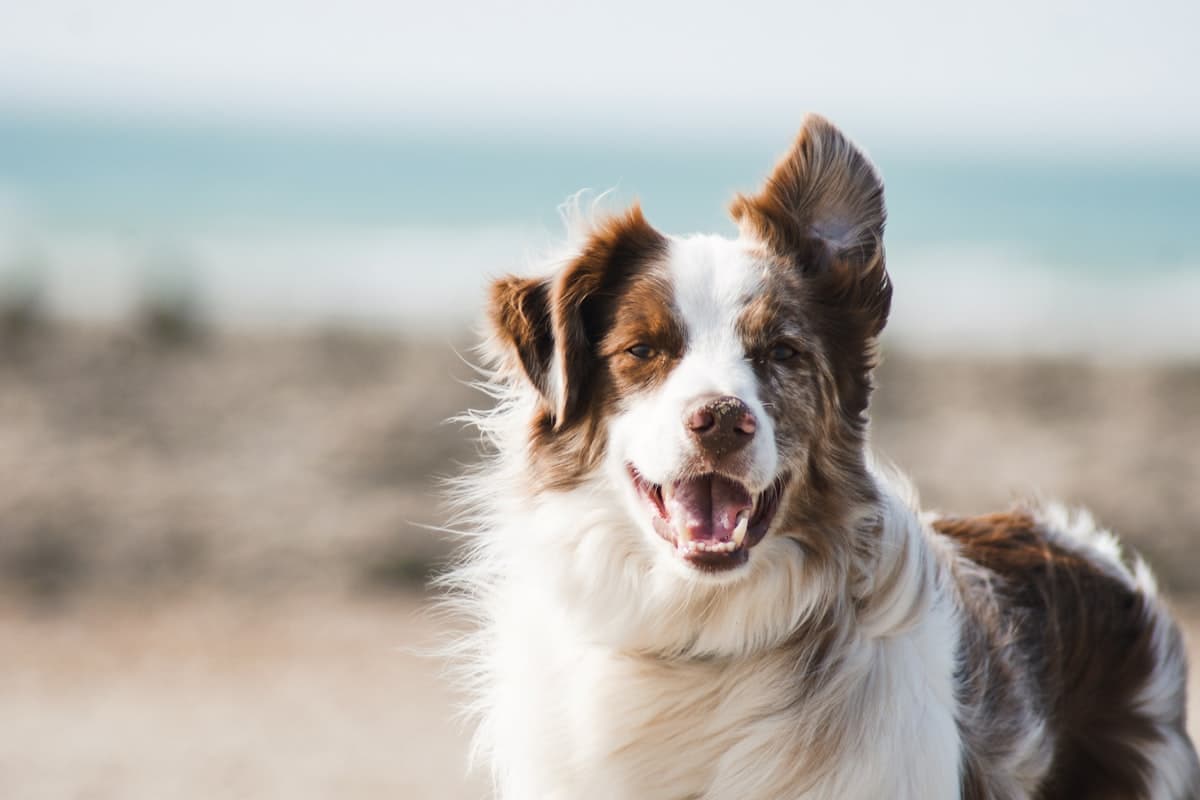
The Head Tilt That Stops Us in Our Tracks
Few canine behaviors are as universally charming as the head tilt. You say a word your dog recognizes — “walk,” “treat,” “dinner” — and their head cocks to one side with an expression of such earnest concentration that it stops you mid-sentence. It’s photogenic, it’s endearing, and it turns out to be far more than just cute. The head tilt is a window into how dogs process sound, language, and emotion.
Scientists have recently begun studying the head tilt more seriously, and their findings suggest it’s a sign of cognitive engagement — your dog isn’t just hearing you, they’re actively processing what you’re saying and trying to extract meaning. The head tilt may be the canine equivalent of leaning in during an interesting conversation.
The Acoustic Theory: Adjusting Their Ears
Dogs have remarkably mobile ears — 18 muscles control each ear, allowing them to rotate, tilt, and reposition independently to pinpoint the source and nature of sounds. The head tilt may help dogs adjust the position of their ear pinnae (outer ear flaps) to better capture and localize sounds, particularly complex sounds like human speech that contain a lot of tonal information.
A 2021 study published in Animal Cognition found that dogs who had learned the names of many toys tilted their heads significantly more often when hearing those names spoken than dogs who hadn’t learned toy names. This suggests the head tilt is associated with mental processing of meaningful sounds rather than just a reflexive response to any auditory stimulus. Dogs who are working harder to understand what you’re saying tilt more — it’s a physical manifestation of mental effort.

The Visual Theory: Seeing Past Their Muzzle
Dr. Stanley Coren, a prominent canine psychologist, proposed that dogs tilt their heads to see facial expressions more clearly past the obstruction of their own muzzle. Dogs with longer snouts may need to tilt their heads to bring your mouth and lower face into better view — and since dogs are remarkably skilled at reading human facial expressions, seeing your full face matters.
This theory predicts that dogs with flatter faces (brachycephalic breeds like Pugs and French Bulldogs) would tilt their heads less, since their shorter muzzles obstruct less of their visual field. Coren’s informal survey of over 500 dog owners found some support for this — 71 percent of owners with longer-muzzled dogs reported frequent head tilting, compared to 52 percent of owners with flat-faced breeds. The difference isn’t enormous, but it’s consistent with the visual theory.
The Social Bond Theory: They’re Reading You
Dogs are deeply attuned to human emotional states — research consistently shows they can distinguish between happy, angry, sad, and neutral human expressions and vocal tones. The head tilt may be part of this emotional intelligence: by repositioning their head, they may be trying to gather more information about your emotional state from subtle cues in your voice and face.
This would explain why dogs tilt their heads more in response to their owner’s voice than to strangers’ voices, and more in response to words spoken with emotional inflection than to monotone speech. They’re not just hearing — they’re empathizing, trying to understand not only what you’re saying but how you’re feeling about it. If you’ve ever noticed your dog tilting their head when you’re upset, they’re probably picking up on emotional and behavioral signals more effectively than you realize.

When Head Tilting Means Something Medical
Persistent, unprovoked head tilting — especially if it’s always to the same side and accompanied by loss of balance, nausea, rapid eye movement (nystagmus), or circling — can indicate a vestibular problem. The vestibular system controls balance and spatial orientation, and inflammation, infection, or tumors affecting the inner ear or brainstem can cause what’s called “vestibular disease” or “old dog vestibular syndrome.”
Vestibular disease is more common in older dogs and can look frightening — the dog may suddenly be unable to walk straight, may fall repeatedly, or may refuse to stand. The good news is that idiopathic (unknown cause) vestibular disease in older dogs often resolves on its own within one to three weeks with supportive care. However, any sudden onset of persistent head tilting should be evaluated by a vet to rule out ear infections, polyps, or more serious neurological conditions.
Why It Makes Us Melt
The human response to the head tilt is almost certainly exploited by dogs, even if not consciously. Dogs who tilt their heads get more attention, more vocal interaction, and more treats than dogs who don’t — which means the behavior is positively reinforced every time we respond to it with “aww” and a biscuit. Over thousands of years of domestication, dogs have become remarkably skilled at producing behaviors that trigger nurturing responses in humans, and the head tilt is one of their most effective tools. It’s adorable, it’s functional, and it’s a small window into the remarkable cognitive and emotional sophistication of the animal sharing your home.