Home
Home
Why Live Plants Change Everything About Fishkeeping
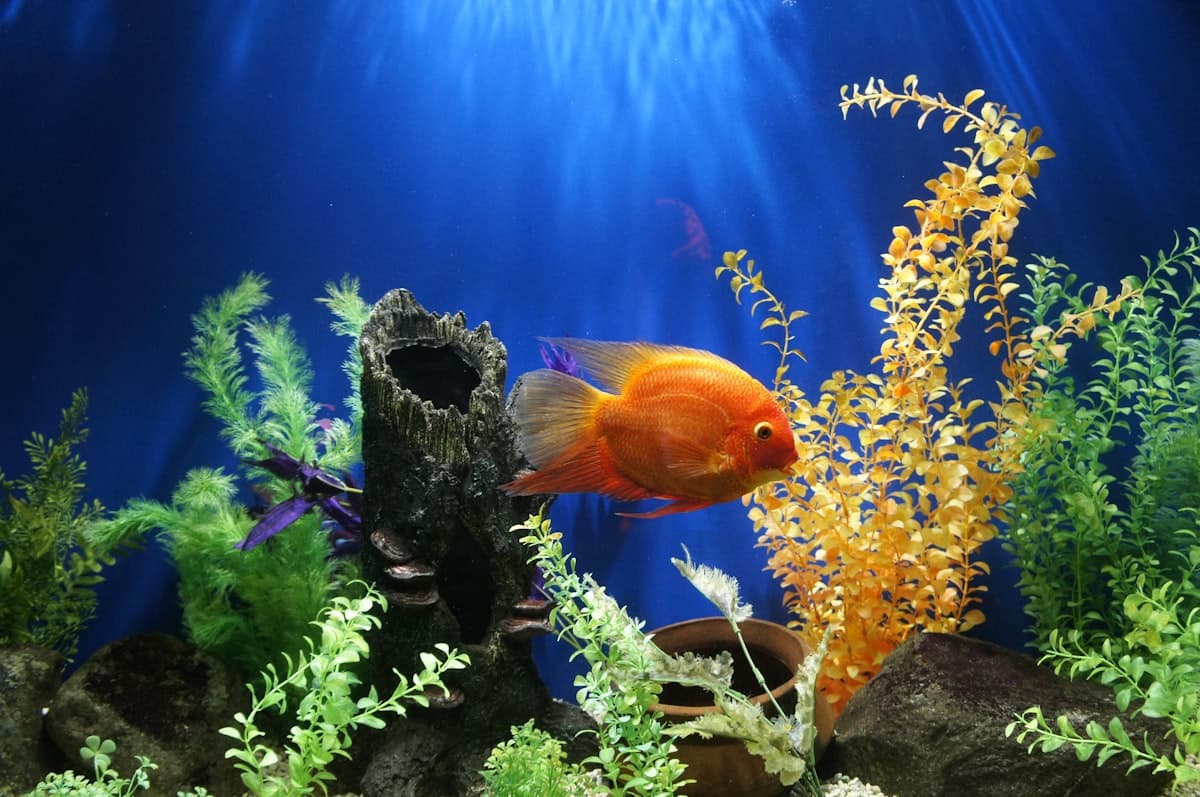
If you’ve only ever kept aquariums with plastic plants and gravel, adding live plants for the first time feels like upgrading from a photograph to a window. Live plants don’t just look better — they fundamentally improve the health of your aquarium by absorbing nitrates, producing oxygen, providing shelter for fish, and creating biological surfaces where beneficial bacteria colonize. A well-planted tank is a more stable, healthier, and more visually stunning environment for your fish.
The common misconception that planted aquariums are expensive, high-maintenance, and only for advanced hobbyists keeps many beginners from trying. In reality, a beautiful planted tank can be set up on a modest budget using beginner-friendly plants that thrive in basic conditions without CO2 injection, specialized substrates, or intense lighting. If you can keep fish alive, you can grow aquarium plants — it’s genuinely that accessible.
Choosing the Right Tank Size
For a first planted aquarium, a 10 to 20-gallon tank is the sweet spot. Larger tanks are actually more forgiving than small ones — more water volume means more stable water parameters, and there’s more room for plants to grow and fill in. A 20-gallon long tank (30 inches wide, 12 inches deep, 12 inches tall) is particularly well-suited for planted setups because the wider footprint gives you more planting area and the lower height makes it easier to light effectively.
Avoid starting with anything under 5 gallons. Nano tanks look appealing on a desk but are significantly harder to keep stable, and the limited space constrains your plant and fish options. Save nano tanks for after you’ve learned the fundamentals in a standard-sized setup.
The Budget Substrate Decision
Substrate is where you’ll face your first real budget decision. Specialized planted tank substrates like ADA Aqua Soil, Fluval Stratum, or UNS Controsoil are nutrient-rich and designed specifically for plant growth. They work beautifully but cost $25 to $50 for a 20-gallon tank’s worth. For a budget-friendly alternative, a layer of organic potting soil (no fertilizers or perlite) capped with one to two inches of inexpensive pool filter sand or fine gravel costs under $15 and provides excellent nutrition for plant roots.
The dirt-capped approach, popularized by aquarist Diana Walstad, has a long track record of success. The decomposing soil provides a slow-release source of nutrients for root-feeding plants, while the sand cap keeps the soil in place and prevents cloudiness. The trade-off is that it’s messy to set up, you can’t easily rearrange plants once established, and deep disturbances to the substrate can release hydrogen sulfide gas. For a first planted tank, most beginners find that a commercial planted substrate is worth the extra cost for the convenience alone.

Lighting: The Single Most Important Factor
Plants need light to photosynthesize, and aquarium lighting determines which plants you can grow more than any other single factor. The good news for budget builds: most beginner-friendly plants thrive under moderate light, and a basic LED fixture designed for planted tanks costs $25 to $60 for a 20-gallon setup.
Look for a light that produces 20 to 40 lumens per liter of tank volume at a color temperature between 6000K and 7000K. These specifications sound technical, but most aquarium lights marketed for planted tanks fall within this range. The Nicrew ClassicLED Plus, Hygger Advanced LED, and Finnex Stingray are popular budget options that work well for beginner plant species.
Run your light on a timer for 6 to 8 hours per day. More light isn’t better — it promotes algae growth without benefiting plants proportionally. Consistency matters more than duration: the same photoperiod every day lets plants develop a rhythm and outcompete algae for available nutrients.
The Best Beginner Plants That Are Hard to Kill
Java Fern (Microsorum pteropus)
The easiest aquarium plant in existence. Java fern grows in low to moderate light, doesn’t need fertilizer or CO2, and tolerates a wide range of water parameters. Attach it to driftwood or rocks with fishing line or super glue — don’t bury the rhizome in substrate, as this causes it to rot. It grows slowly but steadily, eventually forming beautiful arching fronds up to 12 inches tall.
Anubias (Anubias barteri)
Another virtually indestructible plant. Anubias grows attached to hardscape rather than planted in substrate, thrives in low light, and is one of the few plants that herbivorous fish won’t eat. The broad, dark green leaves make a striking contrast against lighter-colored substrates and provide excellent resting spots for small fish and shrimp.
Amazon Sword (Echinodorus bleheri)
A classic centerpiece plant that grows large and lush with minimal effort. Plant the roots in the substrate (it’s a heavy root feeder) and provide moderate light. Amazon swords can grow 12 to 20 inches tall and wide, so they work best as a focal point in the mid-to-back area of the tank. A root tab fertilizer pressed into the substrate near the roots every few months keeps them thriving.
Cryptocoryne Species
Crypts are the reliable workhorses of planted tanks. They tolerate low light, don’t need CO2, and come in varieties ranging from small foreground plants to tall background species. They’re prone to “crypt melt” — where leaves die back dramatically after being introduced to a new tank — but new growth typically follows within a few weeks. Don’t panic and throw them away; they’re just adjusting.

Filtration, Fertilization, and the Nitrogen Cycle
A standard hang-on-back filter or sponge filter works perfectly for a planted tank. Plants actually serve as a secondary biological filter by absorbing ammonia and nitrates directly from the water, which means a planted tank often has better water quality than an unplanted one with the same fish load.
For beginner-level plants, a liquid all-in-one fertilizer dosed once or twice per week provides sufficient micronutrients. Seachem Flourish, NilocG Thrive, and Easy Green from Aquarium Co-Op are popular choices. Root-feeding plants (Amazon swords, crypts, and vallisneria) benefit from root tab fertilizers pushed into the substrate near their bases every two to three months.
CO2 injection is not necessary for beginner plants. Java fern, anubias, crypts, and Amazon swords all grow perfectly well using the CO2 naturally dissolved in tank water from fish respiration and surface gas exchange. CO2 systems unlock faster growth and more demanding plant species, but they’re an upgrade for later, not a starting requirement.
Stocking Fish That Complement a Planted Tank
Some fish are natural partners for planted tanks while others will destroy your plants faster than they can grow. Good choices include small tetras (neon, ember, cardinal), rasboras (harlequin, chili), corydoras catfish, small gouramis, and shrimp (cherry shrimp are both beautiful and functional algae eaters). These species are peaceful, stay small, and either ignore plants or actively benefit from them as shelter.
Avoid goldfish (voracious plant eaters), large cichlids (they dig up and destroy plants), and silver dollar fish (dedicated herbivores) in planted tanks. If you’re new to the aquatic pet world, you’ll find that establishing good health and diet habits for exotic pets — including fish — makes a real difference in the long-term success of your setup.
Budget Breakdown: What It Actually Costs
A complete 20-gallon planted aquarium setup on a budget breaks down roughly like this: tank ($25-40 at pet stores during dollar-per-gallon sales), filter ($15-25 for a sponge or hang-on-back), heater ($15-20), LED light ($30-50), substrate ($15-40 depending on choice), and plants ($20-40 for a starter selection of 5-8 species). Total: $120 to $215 for everything including fish.
The ongoing costs are minimal: electricity for the light, filter, and heater runs a few dollars per month. Fertilizer costs $10-15 per bottle and lasts several months. Water conditioner for water changes is another $8-10 per bottle. Compared to most hobbies, planted fishkeeping is remarkably affordable once the initial setup is complete — and the result is a living, growing piece of nature in your home that’s more captivating than any screen.