 Home
Home
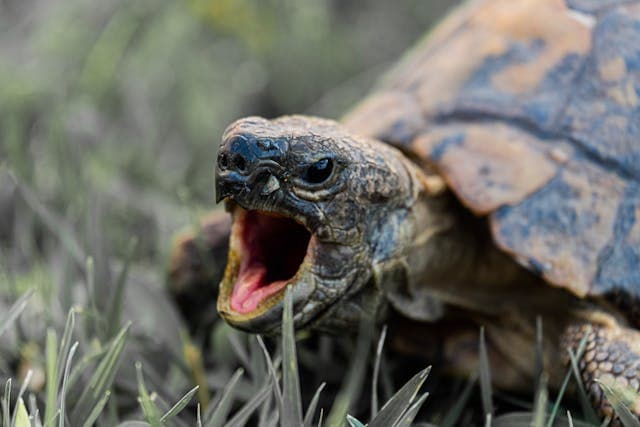
Curious about whether turtles have teeth? Yes, turtles do have teeth, but their dental structure differs significantly from that of mammals like humans.
While turtles possess sharp beaks for grasping and cutting food, they lack traditional teeth embedded in their jaws.
Understanding Turtle Anatomy
Turtles boast unique anatomical features for thriving in diverse habitats:
- Shell: Comprising a carapace and plastron, made of bone and keratin plates.
- Limbs and Feet: Four clawed limbs adapted for swimming, digging, and climbing.
- Head and Neck: Eyes, nostrils, and a horny beak for feeding; lack external ears.
- Respiratory System: Can breathe air and absorb oxygen from water through specialized tissues.
- Digestive System: Omnivorous or herbivorous with a short digestive tract.
- Reproductive Organs: Differ in males and females; reproduce by laying eggs.
- Sensory Organs: Well-developed vision, olfaction, and tactile perception.
Turtle Teeth: The Beak
Instead of teeth, turtles have a horny beak made of keratin, similar to the beaks of birds.
This beak is well-suited for crushing and grinding the various foods that turtles consume in their diet.
Turtle Diet and Nutrition
Turtles thrive on a balanced diet that includes:
- Plant Matter: Leafy greens, vegetables, and aquatic plants provide essential vitamins and minerals.
- Animal Matter: Insects, fish, and commercial turtle pellets offer protein and nutrients.
- Supplements: Calcium sources and vitamin supplements ensure shell health and overall well-being.
- Feeding Frequency: Feed juvenile turtles daily and adult turtles every other day or several times a week.
Tortoises: A Unique Case

It’s essential to note that tortoises, a type of turtle adapted for land environments, also possess a beak but may exhibit different dental adaptations depending on their specific diet and habitat.
Differences Between Turtles and Tortoises
Turtles and tortoises, though similar, have distinct characteristics:
- Habitat: Turtles are aquatic or semi-aquatic, while tortoises are terrestrial.
- Shell: Turtles have streamlined shells for swimming, while tortoises have domed shells for protection.
- Limbs: Turtles have webbed feet or flippers, while tortoises have sturdy, land-adapted limbs.
- Diet: Turtles are omnivorous or carnivorous, while tortoises are primarily herbivorous.
- Behavior: Turtles spend time in water, while tortoises are terrestrial, burrowing for shelter.
- Lifespan: Both have long lifespans, with some turtles and tortoises living over 100 years.
These differences reflect their adaptation to diverse environments and lifestyles.
Conclusion
Turtles do not have teeth in the traditional sense, they do possess a specialized beak made of keratin, which serves a similar purpose.
This beak allows them to efficiently consume their diet, which can vary depending on the species and their natural habitat.



