Home
Home
The Urgent Crisis Beneath the Surface
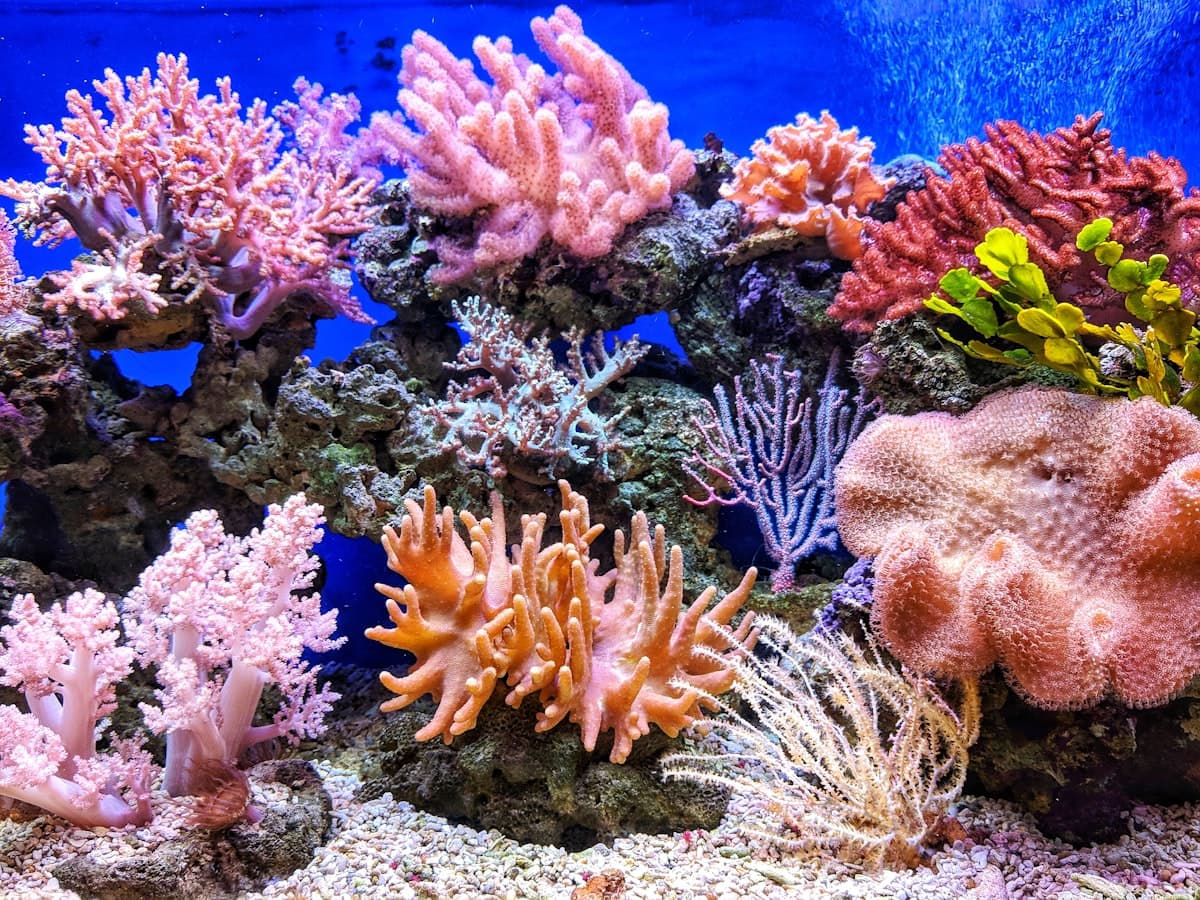
Coral reefs cover less than 1 percent of the ocean floor but support roughly 25 percent of all marine species. They protect coastlines from storm surge, sustain fisheries that feed hundreds of millions of people, and generate billions in tourism revenue. They are, by any measure, among the most valuable ecosystems on Earth — and they’re dying at an alarming rate.
Since the 1950s, the world has lost approximately half its coral reef cover. Warming ocean temperatures trigger mass bleaching events where stressed corals expel the symbiotic algae (zooxanthellae) that provide them with food and color, turning them ghostly white. Ocean acidification — caused by seawater absorbing excess atmospheric CO2 — weakens coral skeletons and slows growth. Pollution, overfishing, and destructive practices like dynamite fishing and coral mining compound the damage. Without intervention, projections suggest that 70 to 90 percent of remaining reefs could be lost by 2050.
But intervention is happening. Across the tropics, an expanding network of coral restoration projects is developing techniques to regrow, transplant, and protect coral reefs — and while no one claims these efforts can single-handedly reverse decades of degradation, they’re buying time and creating proof-of-concept models that could scale to make a meaningful difference.

How Coral Nurseries Work
The most widespread restoration technique involves growing coral fragments in underwater nurseries — typically tree-shaped PVC structures anchored to the sea floor where coral pieces are suspended on monofilament lines. In these nurseries, fragments grow 5 to 10 times faster than they would on a degraded reef because they receive optimal water flow, sunlight, and are protected from predation and competition.
Once fragments reach transplantable size (usually after 6 to 12 months), divers attach them to degraded reef areas using marine epoxy or cement plugs. Survival rates for transplanted corals range from 60 to 90 percent depending on the species, site conditions, and post-transplant monitoring — a remarkable success rate for what is essentially ecological surgery.
The Coral Restoration Foundation, operating primarily in the Florida Keys, has outplanted over 200,000 corals across more than 40 reef sites since its founding. Similar programs in Belize, Indonesia, the Maldives, and Australia’s Great Barrier Reef are scaling up rapidly, often engaging local communities and dive tourism operations in the hands-on work of restoration. This community-driven approach to conservation echoes what we see in terrestrial wildlife protection — the same collaborative spirit that drives efforts to protect coral reefs through community action.
Selective Breeding for Heat Resistance
Perhaps the most promising development in coral science is assisted gene flow — selectively breeding corals that have demonstrated natural heat tolerance and using their offspring to repopulate reefs. Researchers at institutions like the Hawaii Institute of Marine Biology and the Australian Institute of Marine Science have identified coral genotypes that survive bleaching events that kill neighboring colonies.
By crossing heat-resistant corals with genetically diverse wild stock, scientists are developing coral lineages that can tolerate temperatures 1 to 2 degrees Celsius higher than current threshold levels — potentially enough to survive the warming projected through mid-century. This isn’t genetic modification; it’s accelerated natural selection, mimicking what evolution would do over centuries in a compressed timeframe.

Artificial Reef Structures
Where natural reef substrate has been destroyed or destabilized, artificial structures provide the foundation that coral larvae need to settle and grow. These range from simple concrete blocks and steel frames to sophisticated 3D-printed reef structures designed to mimic the complex geometry of natural reefs. The MARS (Modular Artificial Reef Structure) project in Indonesia has deployed thousands of hexagonal steel frames across degraded reef areas, with coral transplants showing impressive growth rates as the structures provide stable attachment points and fish-attracting complexity.
The Limits of Restoration — and Why It Still Matters
Scientists are clear-eyed about what restoration can and cannot accomplish. No amount of coral planting can offset the damage caused by continued warming and acidification. Restoration without addressing root causes is, as one marine biologist put it, “rearranging deck chairs on the Titanic.” The primary solution to coral reef loss is the same as the primary solution to climate change: dramatic reduction in greenhouse gas emissions.
But restoration isn’t futile — it’s strategic. It preserves genetic diversity that might otherwise be lost. It maintains reef structure that protects coastlines and supports fisheries while we work on the larger problem. It provides employment and purpose to coastal communities. And it generates the kind of tangible, visible success stories that build public and political support for broader marine conservation. Every coral fragment planted is a bet on a future where we’ve addressed the root causes quickly enough for these restored reefs to thrive.