Home
Home
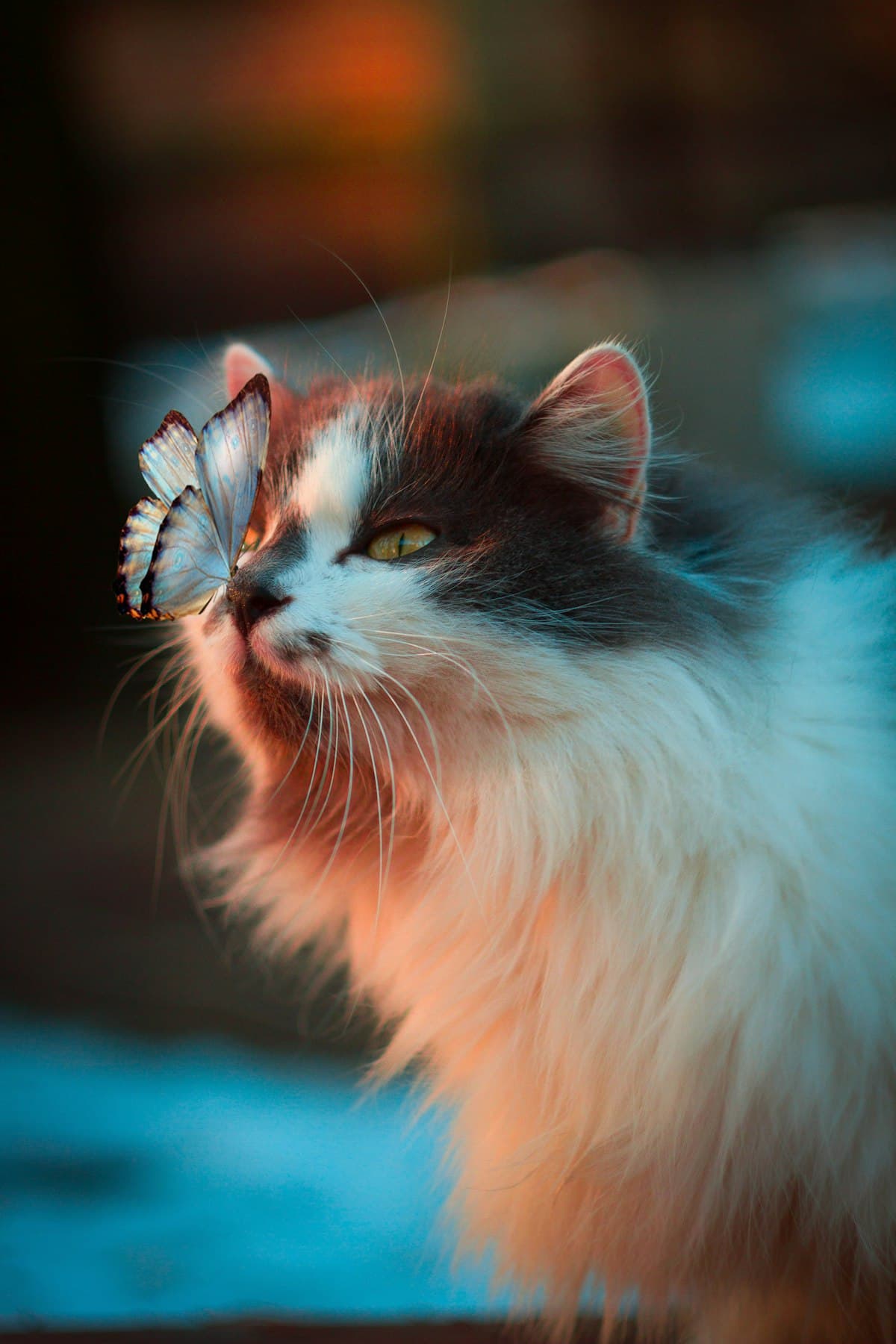
Your Cat Is Watching — and There’s Always a Reason
You’re working at your desk, reading on the couch, or eating dinner, and you feel it — that unmistakable sensation of being watched. You look up, and there’s your cat, pupils locked onto you with an intensity that would be unsettling from any other creature. No blinking. No fidgeting. Just an unbroken, laser-focused gaze that seems to pierce straight through you.
Cat staring is one of the most common feline behaviors that puzzles and sometimes unnerves owners. Unlike dogs, whose eye contact tends to be warm and emotionally transparent, cats stare with an inscrutable quality that leaves you guessing. Are they judging you? Planning something? Deeply in love? The answer depends entirely on context — and once you learn to read the surrounding signals, your cat’s staring becomes a surprisingly clear form of communication.
Reason 1: They’re Showing Affection (The Slow Blink)
If your cat stares at you with soft, relaxed eyes and periodically closes them in a slow, deliberate blink, congratulations — you’re receiving one of the highest compliments in the feline world. Cat behaviorists call this the “slow blink” or “kitty kiss,” and research from the University of Sussex confirmed in 2020 that cats do indeed use slow blinks to communicate positive emotions toward humans.
The slow blink is significant because in cat body language, closing your eyes in the presence of another creature is an act of trust. A cat in the wild would never shut its eyes around a potential threat. When your cat slow-blinks at you, they’re saying “I feel completely safe with you” — which, from an animal whose survival instincts are always running in the background, is genuinely meaningful.
You can slow-blink back. Studies show that cats are more likely to approach humans who slow-blink at them versus those who maintain a neutral expression. It’s one of the few scientifically validated ways to strengthen your bond with your cat through deliberate communication.

Reason 2: They Want Something from You
Let’s be honest — a significant percentage of cat staring is transactional. Your cat has learned that staring at you eventually produces results. Maybe you get up to check their food bowl, toss them a treat, open a door, or start playing. From your cat’s perspective, staring is an efficient and energy-conserving way to make requests.
The timing usually gives this one away. If the staring happens near mealtime, while you’re eating something interesting, or when they’re positioned near a door they want opened, you’re dealing with a polite (or not so polite) demand. Some cats escalate from staring to meowing, pawing, or knocking things off surfaces if the stare alone doesn’t get your attention — a behavior that’s just as fascinating when you look into why cats knock things off tables.
Cats are remarkably good at training their owners through this kind of operant conditioning. If staring at you at 6 AM resulted in breakfast even once, that behavior gets filed under “effective strategies” and will be repeated indefinitely.
Reason 3: Pure Curiosity and Observation
Cats are natural observers. In the wild, survival depends on monitoring the environment for changes — new sounds, movements, potential prey, and potential threats. Your domestic cat retains this deep-wired vigilance, and you happen to be the most interesting and unpredictable thing in their environment.
When your cat watches you cook, work, exercise, or talk on the phone, they’re cataloguing your movements and sounds. Cats are particularly attentive to activities they don’t fully understand, which is why they often stare most intently when you’re doing something unusual — yoga, assembling furniture, or using a vacuum cleaner.
This type of staring is usually accompanied by a relaxed body posture. Ears forward or in a neutral position, tail still or gently swaying, body neither tense nor crouched. Your cat isn’t worried or wanting anything specific — they’re just watching the show.
Reason 4: Hunting Instinct Activation
If your cat’s stare comes with dilated pupils, a crouched body position, and a twitching tail tip, their predatory wiring has kicked in. They’ve spotted something that triggered their hunt response — it might be a bug you can’t see, a shadow on the wall, or even your wiggling toes under a blanket.
The fixed, unblinking stare is a critical phase of the feline hunting sequence: detect, stare, stalk, pounce. In the wild, this concentration allows cats to calculate distance, speed, and the precise moment to strike. Your cat’s pupils dilate to let in maximum light and improve motion detection, which is why their eyes look almost completely black during these moments.
This stare typically ends in one of two ways: a sudden explosive pounce or an equally sudden loss of interest where they look away as if nothing happened. Both outcomes are perfectly normal and reflect how the hunting instinct cycles on and off throughout the day.

Reason 5: They’re Anxious or Stressed
Not all cat staring is positive or neutral. A wide-eyed stare with flattened ears, a puffed tail, or a tense body signals that your cat is stressed, frightened, or defensive. This type of staring is the cat equivalent of hypervigilance — they’re monitoring what they perceive as a potential threat and preparing to fight or flee.
Context is key here. If your cat stares this way after a loud noise, during a thunderstorm, when a new person enters the home, or after a change in their environment, anxiety is the likely driver. The stare isn’t directed at you with affection — it’s directed at you (or past you) with alertness.
Avoid staring back at an anxious cat. In feline body language, direct sustained eye contact from another creature can be interpreted as a challenge or threat. Instead, look away slowly, blink softly, and give them space to self-regulate. If stress-staring becomes a frequent behavior, it’s worth looking into what else might be going on with your cat’s emotional state.
Reason 6: A Medical Issue Might Be Involved
In some cases, unusual staring — especially if it’s a new behavior or accompanied by other changes — can indicate a health concern. Cognitive dysfunction syndrome, which is similar to dementia in humans, can cause older cats to stare blankly at walls, into space, or at their owners with a confused expression. Hypertension (high blood pressure) can affect vision and cause cats to stare or seem disoriented.
Seizure disorders can also manifest as staring episodes. If your cat appears to “zone out” with a fixed gaze, becomes unresponsive to sounds or touch during the episode, or shows twitching or unusual movements, consult your veterinarian. These episodes may look like simple staring to an untrained eye but could be partial seizures that benefit from treatment.
A sudden increase in staring behavior in a senior cat, especially combined with changes in appetite, activity level, litter box habits, or vocalization, warrants a vet visit. It’s probably nothing worrying, but ruling out medical causes gives you peace of mind and ensures your cat gets help if they need it.
Reason 7: They’re Simply Zoning Out
Here’s the most anticlimactic explanation, and it’s more common than most cat articles admit: sometimes your cat is staring in your general direction without actually focusing on you at all. Cats spend a significant portion of their waking hours in a relaxed, semi-alert state — eyes open, senses passively monitoring, mind somewhere between awake and asleep.
You’ve probably caught yourself staring at a wall while lost in thought. Your cat does the same thing, and you just happen to be in their line of sight. The giveaway is a lack of response when you move or speak — a truly staring cat will track your movements or react to your voice, while a zoning-out cat maintains a fixed, slightly unfocused gaze regardless of what you do.
This is completely normal and requires no response from you. Your cat is comfortable, relaxed, and simply existing in your shared space — which is really what cohabitation with a cat is all about.
How to Respond to Your Cat’s Staring
The best response depends on what type of stare you’re receiving. For affectionate slow blinks, blink back slowly and enjoy the moment of connection. For demanding stares near mealtime, try not to immediately reward the staring (unless it is actually mealtime) to avoid reinforcing attention-demanding behavior.
For curious observation staring, feel free to talk to your cat. Many cats enjoy the sound of their owner’s voice and will tilt their head or adjust their ears in response to being addressed directly. For hunting stares directed at your feet, redirect their energy with an appropriate toy before those claws find your toes.
The one rule that applies across all scenarios: never punish your cat for staring. It’s a natural, healthy behavior that serves important communicative and instinctual functions. Understanding what the stare means, rather than trying to stop it, is the path to a deeper relationship with your wonderfully weird feline companion.