Home
Home
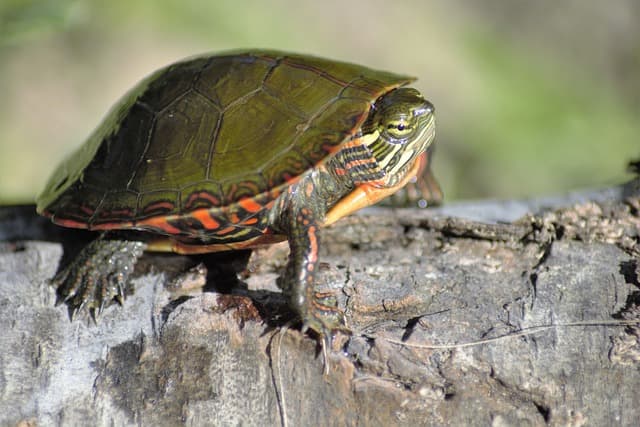
What Are Painted Turtles? Painted turtles are a species of freshwater turtles known for their distinctive and colorful markings.
They are popular pets due to their manageable size and striking appearance.
Overview of Painted Turtles
Painted turtles (Chrysemys picta) are native to North America and are the most widely distributed turtle species on the continent.
Their vibrant shell patterns, which include red, yellow, and green hues, make them easily recognizable and attractive to turtle enthusiasts.
Painted turtles have smooth, flat shells adorned with bright red and yellow stripes on their neck, legs, and tail.
Their carapace varies from dark olive to black, and they typically reach 4-10 inches in length.
They inhabit slow-moving freshwater environments like ponds, lakes, marshes, and creeks, favoring areas with soft, muddy bottoms and abundant aquatic vegetation.
To learn more about taking care of turtles and how to tell if turtles is sick, check out our detailed guides.
Painted Turtles as Pets
Painted turtles can make great pets for those willing to provide the appropriate care and environment. They require specific habitats, diets, and attention to their health needs.
Housing Requirements
A suitable tank for a painted turtle should have:
- Adequate Size: At least a 20-gallon tank for young turtles, increasing to 75 gallons for adults.
- Basking Area: A dry area under a heat lamp where the turtle can bask and regulate its body temperature.
- Water Quality: Clean, filtered water with a consistent temperature between 75-85°F.
Diet and Nutrition
Painted turtles are omnivores, eating a varied diet that includes:
- Aquatic Plants: Such as duckweed and water lilies.
- Insects and Fish: Small fish, worms, and insects.
- Commercial Turtle Pellets: Formulated to provide balanced nutrition.
Health and Wellness
Maintaining the health of painted turtles involves regular monitoring for signs of illness, such as:
- Shell Rot: Soft spots or discoloration on the shell.
- Respiratory Infections: Symptoms include wheezing, nasal discharge, and lethargy.
- Vitamin A Deficiency: Swollen eyes and lack of appetite.
Explore our articles on what do turtles eat for comprehensive tips and advice.
Conservation Status

While painted turtles are not currently endangered, they face threats from habitat destruction, pollution, and the pet trade.
Conservation efforts focus on protecting their natural habitats and promoting responsible pet ownership.
For more information about the conservation status of painted turtles, refer to Wikipedia.
Interesting Facts About Painted Turtles
Painted turtles can live for 20-30 years in the wild and even longer in captivity with proper care. In colder climates, they hibernate during winter by burrowing into the mud at the bottom of their aquatic habitats.
Each painted turtle has a unique shell pattern, akin to a human fingerprint, which allows for individual identification.
Discover more fascinating facts about turtles in our section on turtle facts and turtle species.
Conclusion
Painted turtles are a beautiful and intriguing species that can make rewarding pets for dedicated owners.
By providing the right environment, diet, and care, you can ensure your painted turtle thrives and enjoys a healthy life.