Home
Home
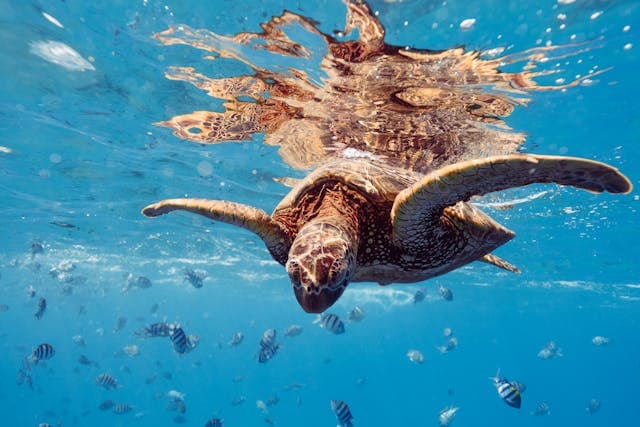
Can Turtles Swim? Yes, turtles can swim, and most species are excellent swimmers, with their aquatic abilities being crucial for their survival.
Understanding Turtle Swimming Abilities
Turtles are well-adapted to aquatic environments, with many species spending a significant portion of their lives in water. Their physical features and behavior reflect their swimming proficiency.
Types of Swimming Turtles
- Sea Turtles: These turtles are highly adapted to ocean life, with flipper-like limbs that allow them to swim gracefully and efficiently.
- Freshwater Turtles: Found in rivers, lakes, and ponds, these turtles have webbed feet that aid in swimming.
- Semi-Aquatic Turtles: These turtles, such as the box turtle, spend time both in water and on land. They can swim but are not as proficient as sea or freshwater turtles.
For more details on taking care of turtles and can turtle eat vegetables, check our other articles.
Physical Adaptations for Swimming
Turtles have several adaptations that make them excellent swimmers:
- Streamlined Shell: A streamlined shell reduces water resistance, allowing turtles to move smoothly through the water.
- Webbed Feet or Flippers: Depending on the species, turtles have either webbed feet or flippers, aiding in propulsion and maneuverability.
- Buoyancy Control: Turtles can regulate their buoyancy by adjusting the air in their lungs, helping them dive and surface efficiently.
Benefits of Swimming for Turtles
Swimming is a natural behavior that offers numerous benefits for turtles, including essential exercise to maintain healthy weight and muscle tone, the opportunity to forage for food and catch prey, and assistance in thermoregulation, especially in warm climates.
To ensure turtles thrive, provide a safe swimming environment with clean, chemical-free water, an appropriate water temperature for their species, and ample space for them to swim and explore freely.
Learn more about can turtles drown, visit our detailed guides.
Common Swimming Issues and Solutions

Swimming is a natural behavior for turtles that provides essential exercise, helping them maintain a healthy weight and muscle tone, facilitates foraging for food and catching prey, and aids in thermoregulation, particularly in warm climates.
To ensure turtles thrive, offer a safe swimming environment with clean, chemical-free water, maintain an appropriate water temperature for their species, and provide ample space for them to swim and explore freely.
For more detailed information on turtle swimming and care, refer to Wikipedia.
Conclusion
Turtles can swim, and it is an essential part of their natural behavior and well-being.
Whether in the ocean, rivers, or ponds, turtles use their physical adaptations to navigate and thrive in aquatic environments.
Providing a safe and suitable habitat ensures your turtle enjoys the benefits of swimming, contributing to their overall health and happiness.